Available Head
Assess net head from water levels, pipe routes and friction losses.

Select suitable units using existing waterways, head, flow and electricity needs.
Assess net head from water levels, pipe routes and friction losses.
Review water supply, irrigation and process constraints, plus seasonal and hourly flow variations.
Confirm target power, supply hours and grid-connected or standalone operation.
TDKP-20 units can be assessed for 3-inch or 4-inch piping based on head, flow and pipe conditions.
| Assessment Item | Reference |
|---|---|
| Unit | TDKP-20 |
| Pipe Configuration | 3-inch / 4-inch, selected by design |
| Reference Net Head | 10–70 m |
| Piping & Output | Determined by pipe length, flow, losses, efficiency and load |
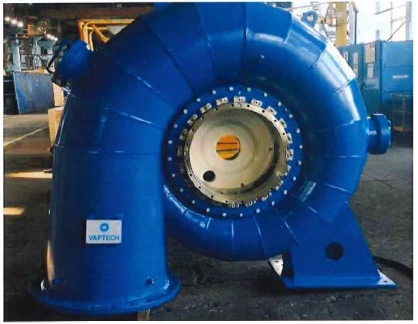
Plan intake, pressure piping, main valves, turbine, generator and tailwater together with civil and electromechanical interfaces.
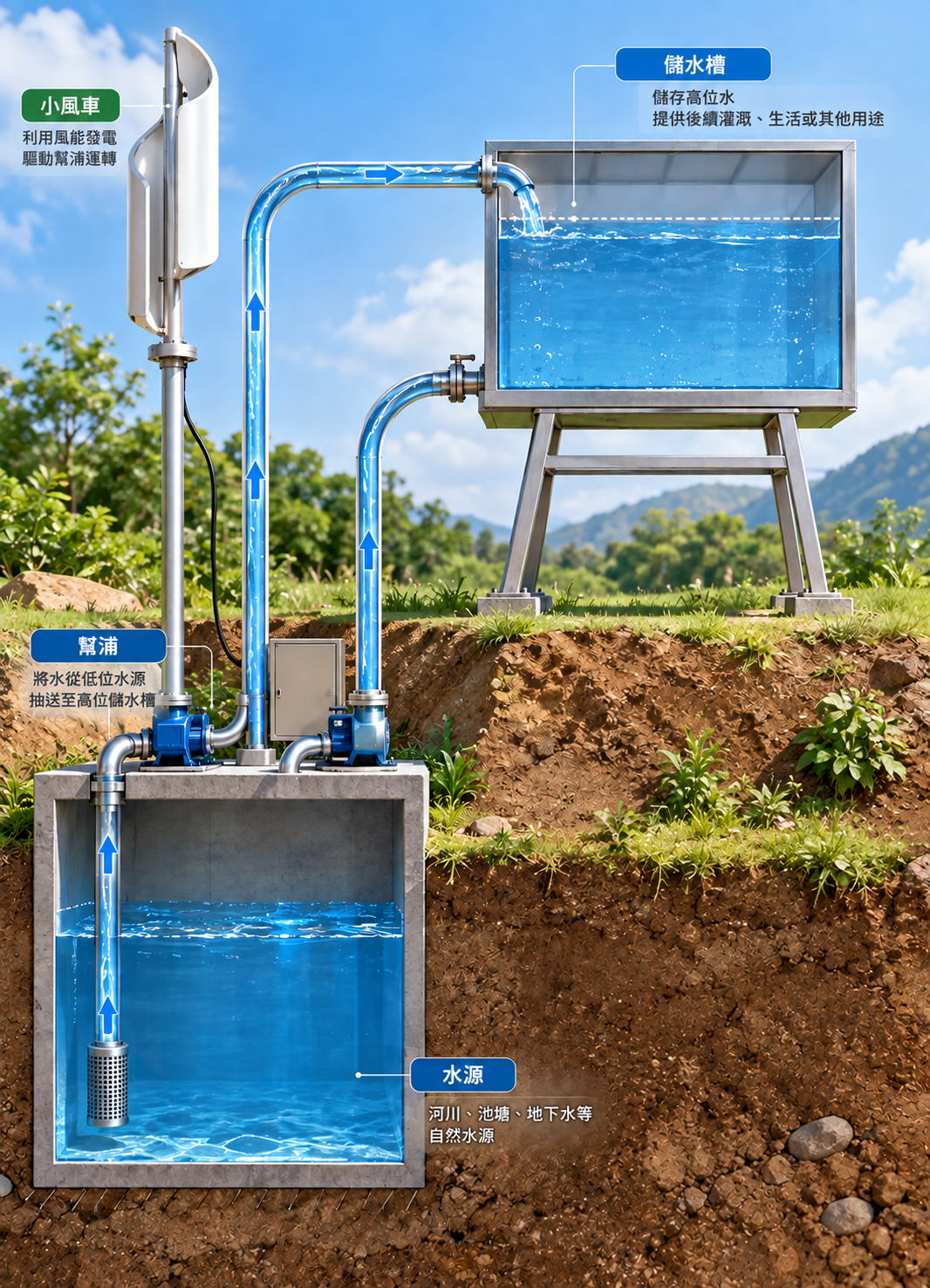
Use available wind or solar electricity to drive pumps.
Pump water to an elevated tank to store potential energy.
Water flows through piping and a micro hydro unit to convert potential energy to electricity.
Start with your site's needs to determine equipment, configuration and integration.