Single- & Dual-axis Tracking
The base tracks azimuth; tilt can be fixed or use an optional adjustable mechanism.

Plan active tracking and modular layers around sunlight, space and application needs.
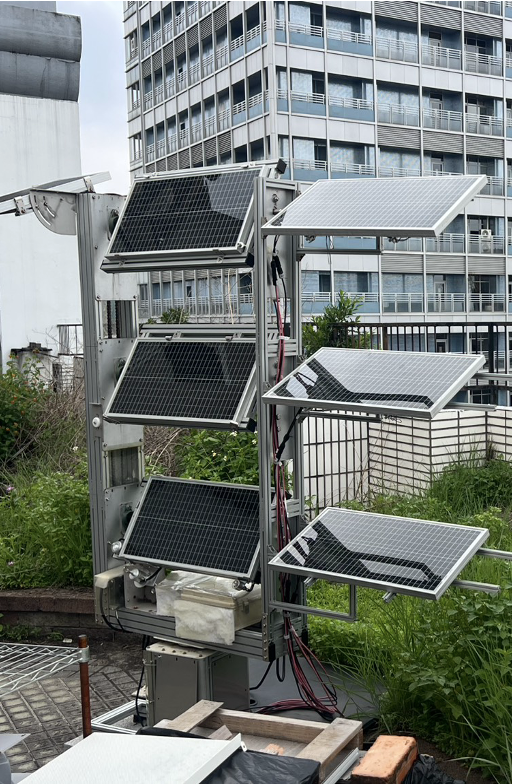
The base tracks azimuth; tilt can be fixed or use an optional adjustable mechanism.
Select layers, module count and structure for the site, with modular shipping and on-site assembly.
Include wind detection, high-wind protection and standby positions in control design.
Evaluate remote monitoring, batteries and AC power equipment as needed.
Final selection and configuration are confirmed per project.
| Model | Tracking Axes | Layers | Modules per Layer | Total Rated Module Power |
|---|---|---|---|---|
| 1AT-122-1800W | Single-axis | 1 | 2 × 2 | 1,800 W |
| 1AT-123-2700W | Single-axis | 1 | 2 × 3 | 2,700 W |
| 1AT-124-3600W | Single-axis | 1 | 2 × 4 | 3,600 W |
| 2AT-321-2700W | Dual-axis | 3 | 2 × 1 | 2,700 W |
| 2AT-122-1800W | Dual-axis | 1 | 2 × 2 | 1,800 W |
Rated power is not the actual output at any given moment.
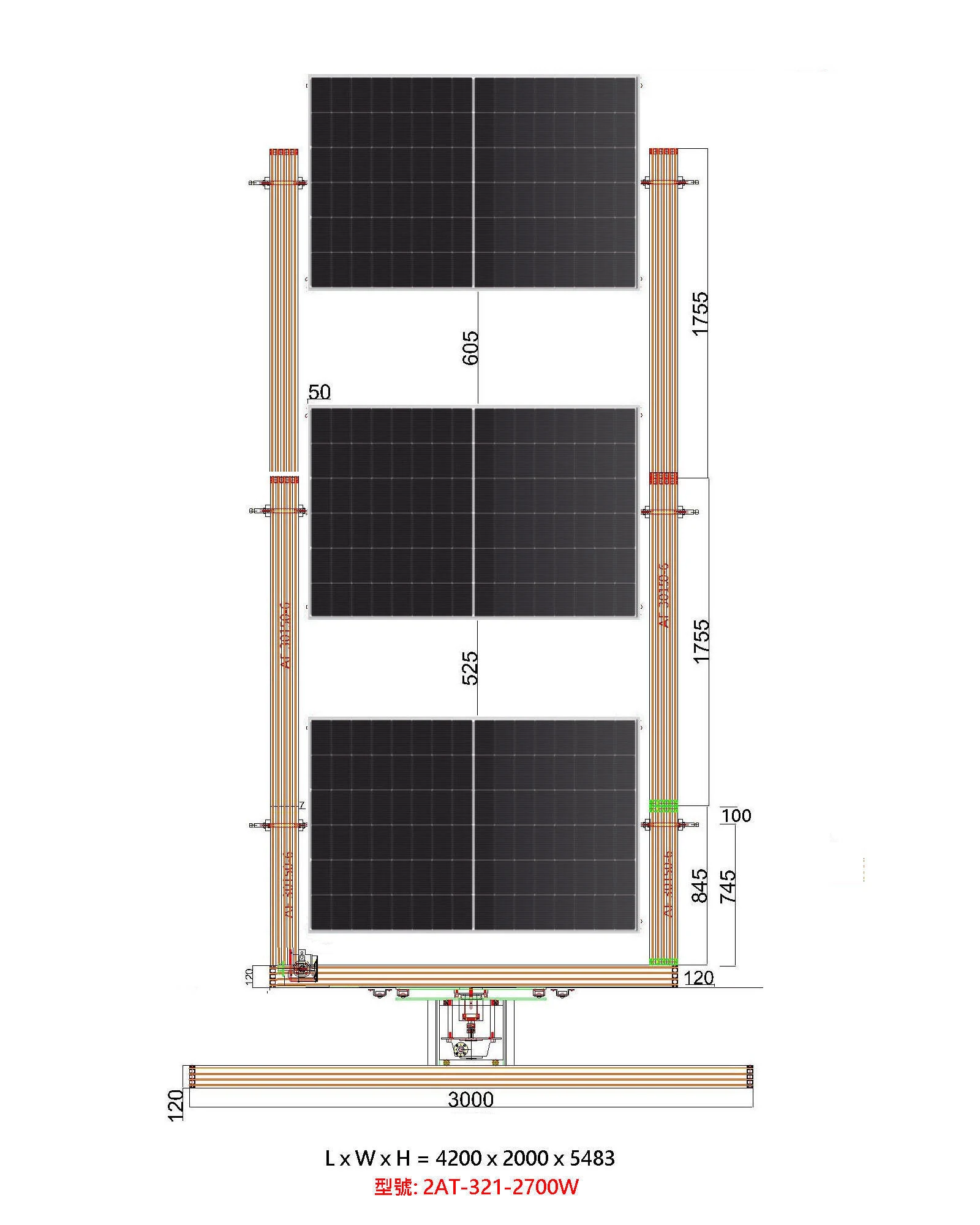
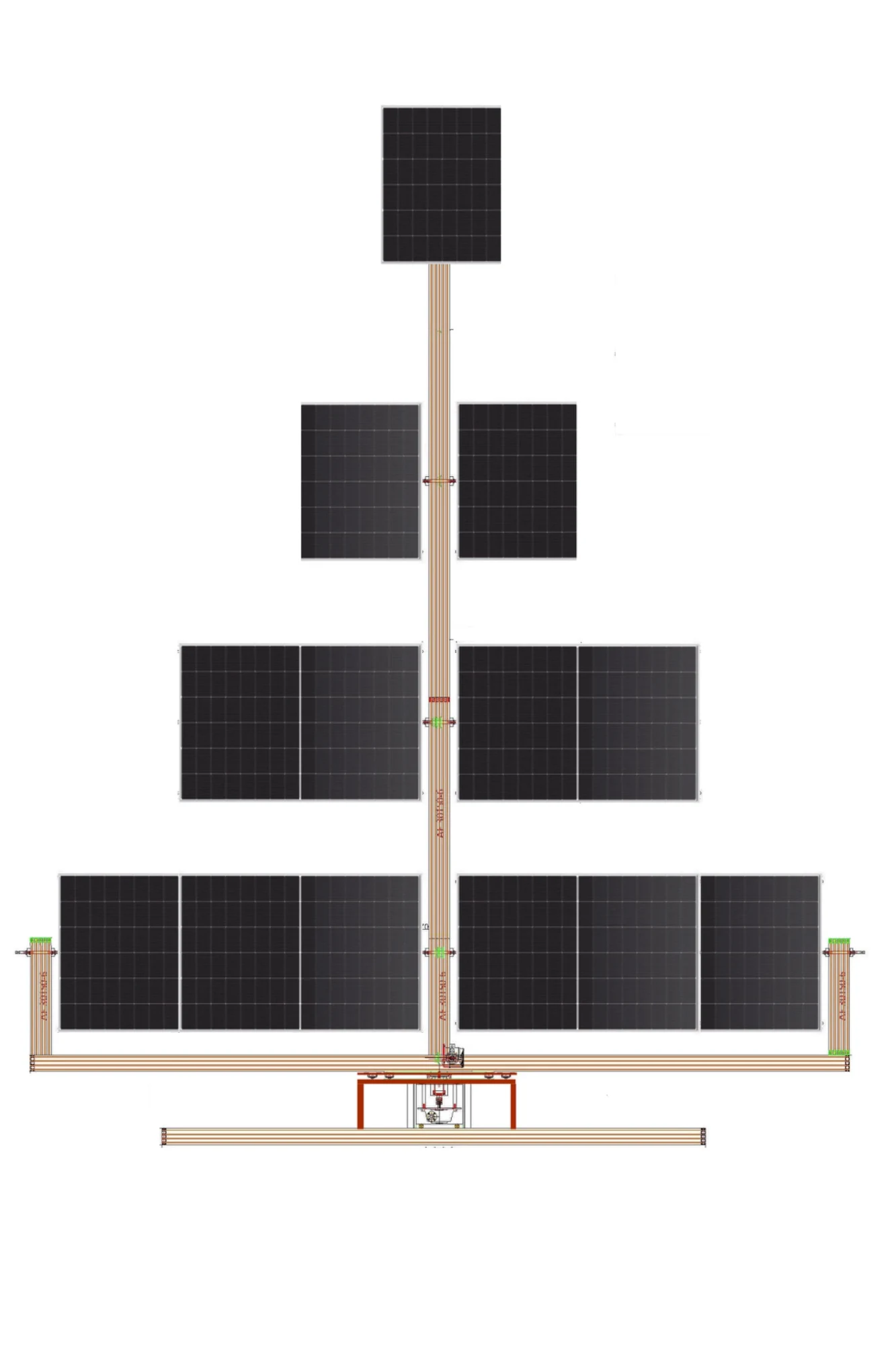
The video shows solar tracking equipment on site. The test page includes power and daily energy charts from different periods.
Check area, sun direction, nearby shading and equipment movement clearance.
Evaluate foundations, supports, wind, protective positions and engineering requirements.
Plan transport, lifting, assembly and maintenance access around equipment dimensions.
Confirm inverters, protection and storage for loads and grid-connected or standalone use.
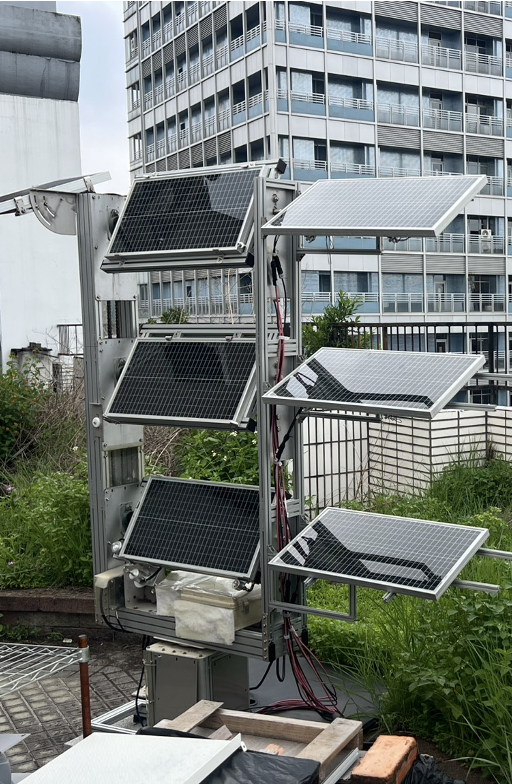
View the demonstration site, baselines and test periods.
Learn MoreDemonstration site photo
Evaluate generation, storage and charging for parking areas and fleets.
Learn MoreConcept illustrationStart with your site's needs to determine equipment, configuration and integration.