Embedded Energy Management
Each unit includes a distributed storage EMS for autonomous scheduling, monitoring and protection.

Explore storage equipment and autonomous coordination around load and dispatch needs.
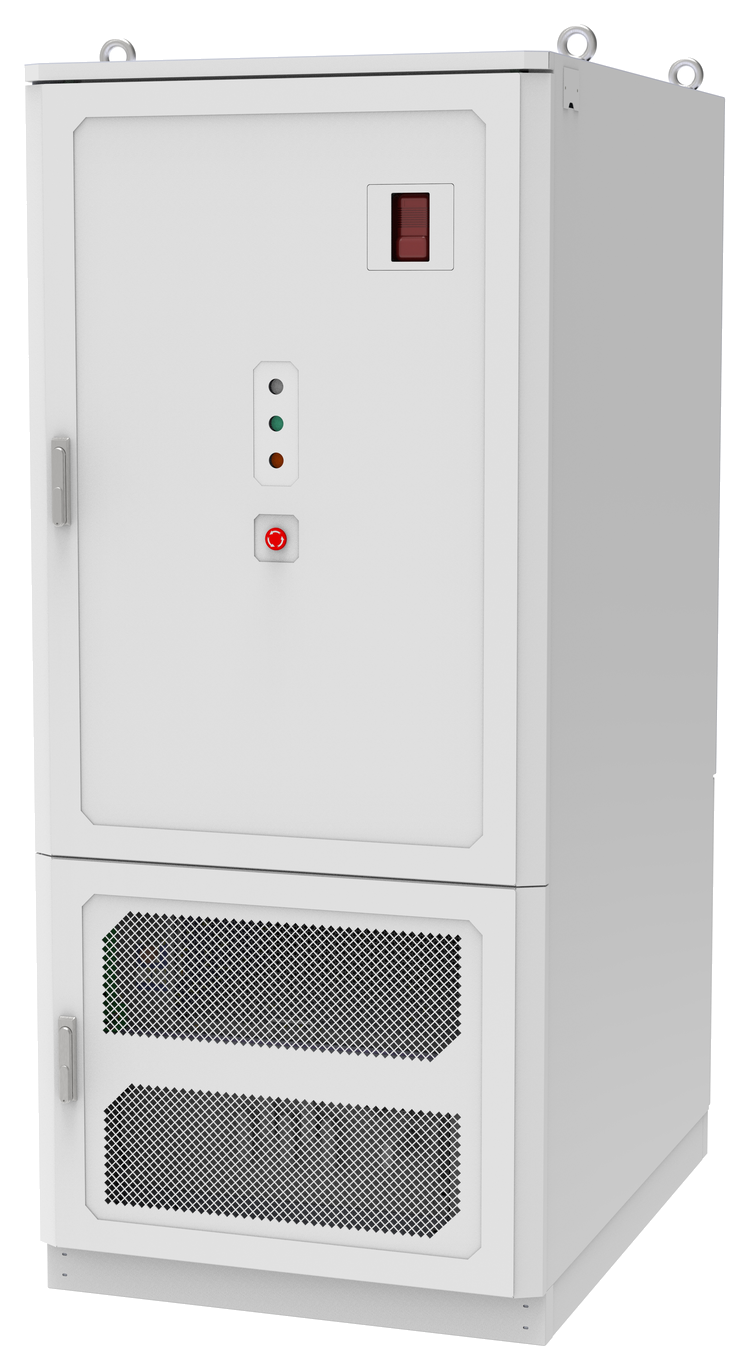
| Item | Specification |
|---|---|
| Battery type | LFP 3.2V/314Ah |
| Battery pack capacity | 48.23kWh |
| Battery pack protection | IP67 |
| Battery Configuration | 1P384S |
| Rated energy | ≥ 385.8kWh |
| Rated voltage | 1,228.8Vdc |
| Voltage range | 1113.6–1382.4Vdc |
| Charge/discharge rate | ≤ 0.5P |
| Depth of discharge | 0–95% |
| Battery Cooling | Liquid Cooling |
| Standards | IEC62619, CNS62619 |
| Item | Specification |
|---|---|
| Rated power | 200kW@45°C |
| Rated grid voltage | 690Vac |
| Current distortion THDi | < 3% |
| DC component | < 0.5% |
| Permitted grid voltage range | -15%–10% (configurable range) |
| Rated grid frequency | 55Hz–65Hz |
| Wiring | 3PH+PE |
| AC protection | IP66 |
| AC cooling | Smart air cooling |
| Standards | IEC62477/IEC61000 |
| Item | Specification |
|---|---|
| Dimensions (W × H × D) | 1400 × 2250 × 1400 mm |
| Equipment Weight | 3.4 T |
| System protection | IP54 |
| Maximum operating altitude | 4000 m (derating above 2000 m) |
| Operating temperature | -30°C–50°C (derating above 45°C) |
| Operating humidity | 0%–95% (non-condensing) |
| Fire protection | Aerosol suppression + proactive fire warning |
| Communication interface | Ethernet |
| Communication protocol | IEC61850 / MODBUS TCP/IP |
| Wiring | Bottom cable entry and exit |
| Optional equipment | Grid/island switching cabinet (optional) |
Dimensions and weight are indicative; project product drawings govern. Confirm specification changes against the latest equipment documentation.
Equipment brand: Li Sheng Technology (鋰昇科技). Supply, certification and site configuration are subject to equipment documentation.
Each unit includes a distributed storage EMS for autonomous scheduling, monitoring and protection.
Parallel units share load peer-to-peer, coordinating output automatically without a central controller.
Local schedules continue when the cloud connection is lost.
Added units join coordination automatically; confirm actual configuration and operating conditions for each project.
Plan charging and discharging around applicable tariffs and operating hours.
Plan peak-power reduction using contracted capacity and real-time loads.
Configure surplus charging and reverse-flow prevention according to system design.
Identify offline equipment through node heartbeats or communication status.
Online EMS units exchange updated available power and SOC data.
Redistribute output when remaining units have headroom and protection conditions permit.
Retain offline events and response records, and arrange on-site repairs.
Start with your site's needs to determine equipment, configuration and integration.